
Malaysia Player Safety Centre
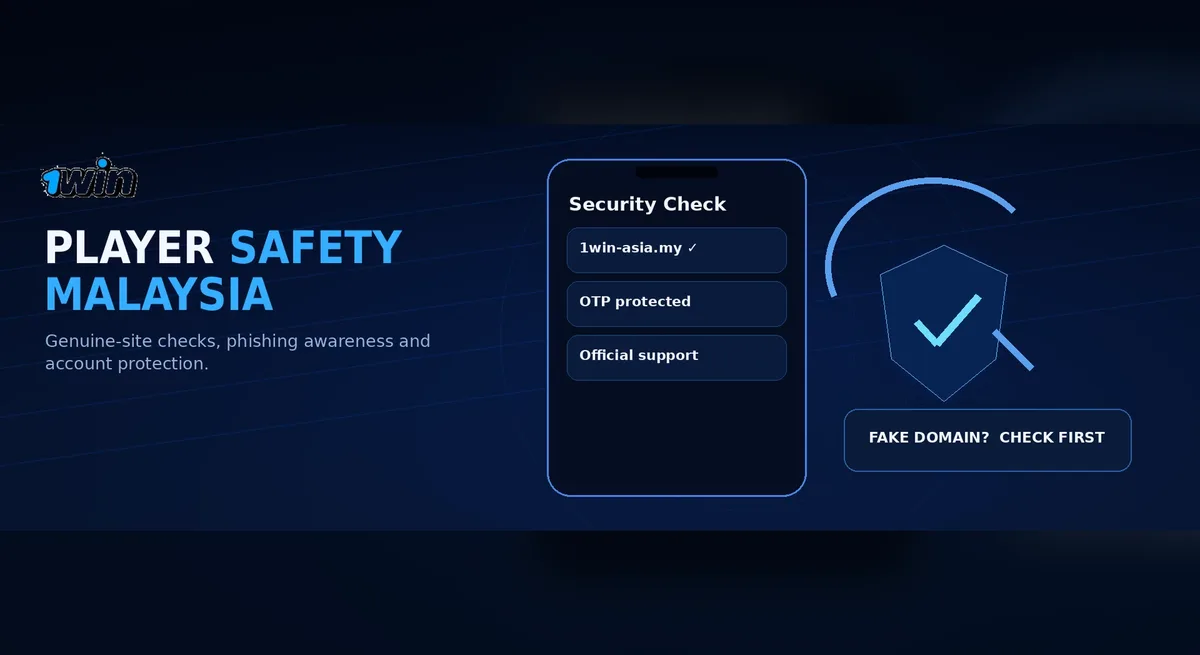
This page is a practical safety resource for 1win players in Malaysia, not a promotional article. It exists to help you recognize phishing attempts, fake apps, and payment scams that target betting and casino accounts, and to give clear steps to follow if your account or money ever looks compromised. Below is a red flags checklist, a step-by-step response plan, and a short list of independent Malaysian resources worth knowing about.
Key Takeaways
- Scams usually start with phishing, fake domains or fake APK files copying the real app.
- Real support does not ask for a password, OTP code, or upfront payment.
- No single red flag proves a scam alone; several signals together do.
- If compromised, change the password, enable two-factor authentication, and contact support and the bank the same day.
- Bank Negara Malaysia and PayNet are independent resources, not regulators of 1win, which operates under a Curacao license.
How Scams Against 1win Players Usually Start: Phishing, Fake Domains and Fake Apps
Most scams targeting 1win players in Malaysia begin with a phishing message, a lookalike domain, or a fake APK file that copies the real app’s look but not its security.
Phishing usually arrives as an SMS or social message claiming an account needs urgent verification. The link leads to a page built to look identical to 1win but hosted on a lookalike domain: an extra letter, or a stray hyphen. Typing a password there hands it straight to whoever built the page.
Fake apps work the same way. A copied APK can carry the same icon as the genuine app while asking for permissions a betting app has no reason to need, such as reading SMS messages. Install only from the official site or app store, not a chat link.
- Check the domain letter by letter before entering a password.
- Download the app only from the official site or an app store listing.
- Treat «urgent verification» as a reason to slow down, not speed up.
Fake Telegram and WhatsApp «1win Support» Accounts
Scammers often create Telegram or WhatsApp profiles using the 1win name and logo to pose as support staff and ask for account details or upfront payments.
A convincing profile picture and a name like «1win Support Malaysia» costs a scammer nothing. These accounts often reach out first, offering to «help» resolve a withdrawal or free up a stuck bonus. The request usually escalates: a login code, a balance screenshot, or a small «processing fee» before winnings can supposedly be released.
Genuine support does not need a password, an OTP code, or an upfront payment. A conversation asking for any of those three is reason enough to stop replying and verify through the official app instead.
Red Flags Checklist: Signs a Message, Site or App Isn’t Really 1win
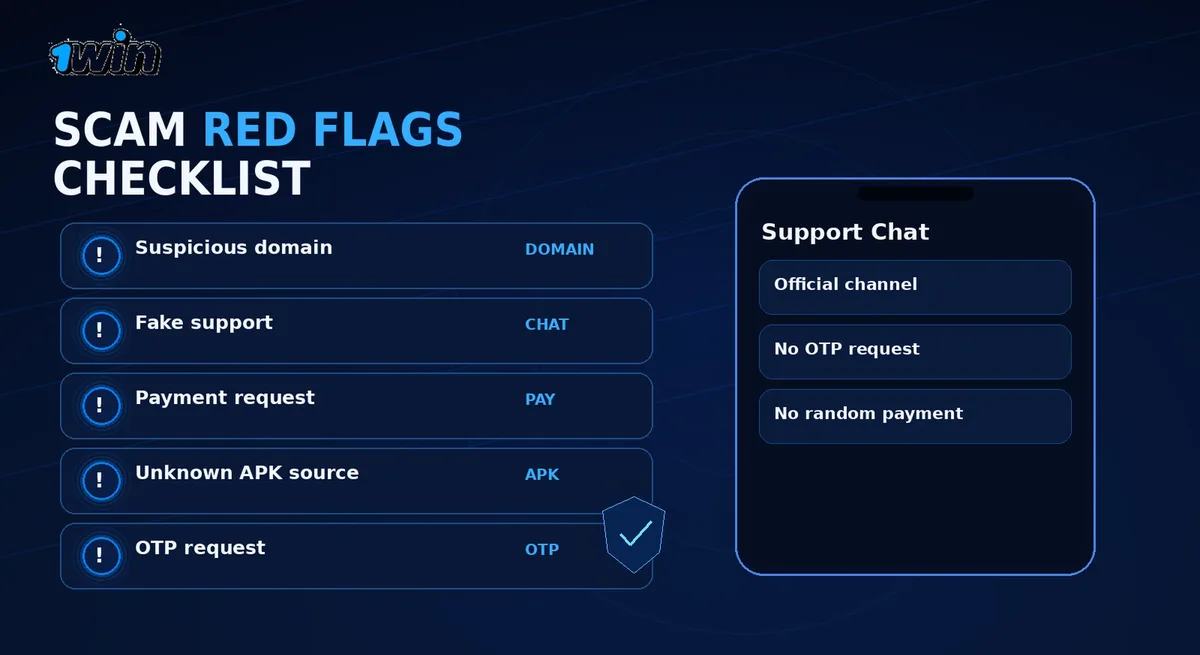
No single red flag proves a scam by itself, but several together, urgency, OTP or password requests, unofficial links, upfront fees, are a strong signal to stop and verify.
None of the signs below proves a scam alone; what matters is how many appear together.
| Red flag | Why it matters |
|---|---|
| Urgent language («act within 10 minutes») | Pressure to skip normal verification |
| Request for a password or OTP code | Real support never needs either |
| Link or APK from outside the official site | Main way fake domains and apps spread |
| Upfront «fee» to release a withdrawal | Legitimate payouts need no fee first |
| Contact started by «support,» not the player | Genuine support rarely reaches out first |
| Slightly altered domain spelling | A classic lookalike-page sign |
Treat two or more together as a reason to pause and verify through the official app or site.
Suspicious Payment Requests and How to Confirm a Transaction Is Genuinely Yours
A genuine transaction appears in the player’s own account history; any payment request made outside that dashboard, or to a personal bank account, should be treated as suspicious.
A legitimate deposit or withdrawal shows up inside a player’s own account history, matched to the method and amount initiated. Money requested to a personal bank account «on 1win’s behalf,» a fee before a withdrawal clears, or a payment link sent over chat instead of the cashier, did not come from 1win.
Malaysian players commonly use online banking and e-wallets; check the exact methods available inside the account rather than trusting an outside message. Three quick checks: does the amount match, does the method match the usual one, and does the transaction appear in the account’s own history.
Device Security Habits That Actually Reduce the Risk of Account Takeover
Keeping a device’s operating system updated, avoiding public Wi-Fi for logins, and using a unique password with two-factor authentication meaningfully lowers account-takeover risk.
A handful of habits do most of the real work: keep the operating system updated, since many attacks exploit gaps a pending update would have closed; avoid public Wi-Fi for logins; use a password unique to the account; and turn on two-factor authentication where available, so a leaked password alone isn’t enough to get in.
None of these habits guarantees anything alone. Together, they close most of the easy paths an attacker would otherwise use.
What to Do Now If Your Account or Money Looks Compromised
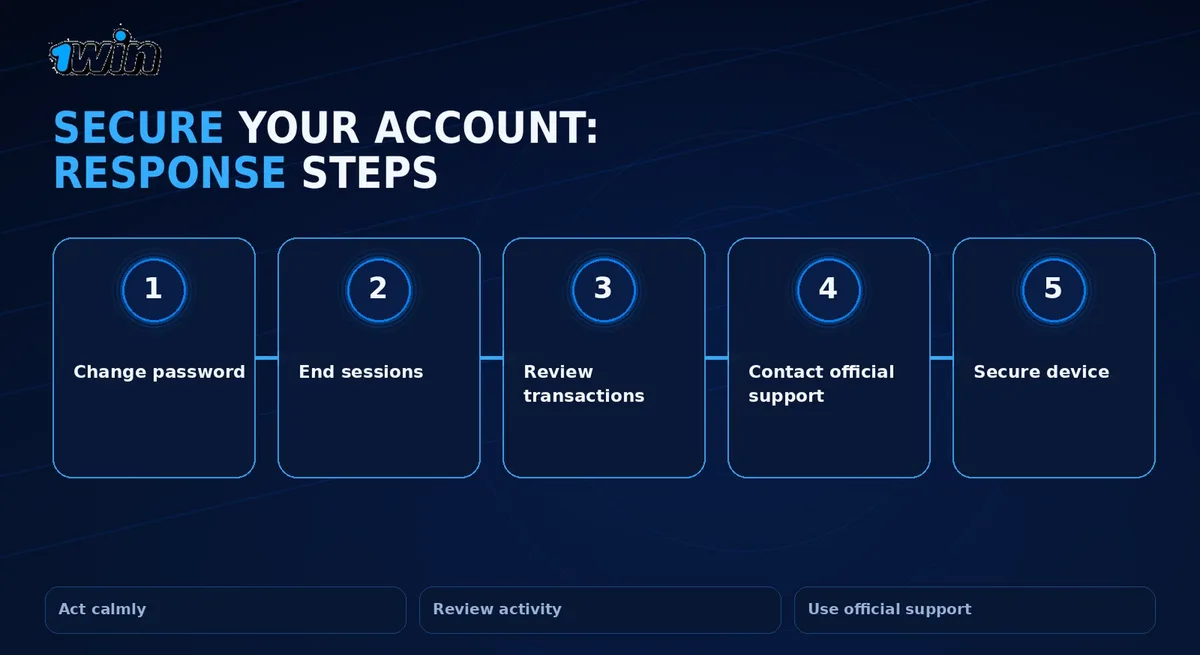
If an account or payment looks compromised, the first steps are to change the password from a trusted device, enable or check two-factor authentication, and contact support and the relevant bank or e-wallet provider without delay.
- Change the password immediately from a trusted device, not the one suspected of being compromised.
- Turn on two-factor authentication if inactive, or confirm it’s set to the player’s own phone.
- Check the account history for logins or contact details that don’t look familiar.
- Contact support through the official app, not a prior Telegram/WhatsApp chat.
- If money moved without authorization, contact the bank or e-wallet provider the same day.
- Change the password on any other account that reused the same one — one leak opens more than one door.
A flagged or restricted account tied to unusual activity falls under 1win’s own Anti-Fraud Policy, which covers how that kind of review works separately from the scam-prevention steps above.
Malaysia’s Official Safety Resources: Bank Negara Malaysia, PayNet and Reporting a Scam
Bank Negara Malaysia publishes financial fraud-awareness guidance and PayNet oversees Malaysia’s FPX and DuitNow payment rails, both independent resources, not regulators of 1win, useful for verifying a suspicious financial approach.
Bank Negara Malaysia, the country’s central bank, maintains fraud-awareness guidance worth checking whenever a financial approach feels off. PayNet, which operates Malaysia’s FPX and DuitNow rails, is a similarly useful reference for how legitimate transfers work. Neither organization regulates or approves 1win, which operates under a Curacao gaming license, separate from Malaysian financial regulation.
Anyone targeted by a scam, whether or not it mentioned 1win, can report it through Malaysia’s national scam-response channels and the commercial crime unit of the Royal Malaysia Police, alongside the bank if money was involved.
Responsible Gambling Is a Separate Topic
Account safety and responsible gambling are related but different questions. This page is about recognizing scams and protecting an account and funds from other people. Anyone looking for deposit limits, betting limits, self-exclusion or other tools to manage how much time or money they spend playing can find those in full on the responsible gambling page for Malaysian players. 1win is intended for players aged 18+ only.
FAQ
Does Bank Negara Malaysia regulate or approve 1win?
No. BNM is referenced here only as an independent fraud-awareness resource. 1win operates under a Curacao gaming license, separate from Malaysian financial regulation.
A message claiming to be 1win support already got my OTP code. What now?
Change the password from a trusted device, check for unrecognized changes, and contact official support right away.
Is it safe to click a link from «1win support» on WhatsApp?
Treat it with caution. Compare the domain letter by letter against 1win-asia.my, and if in doubt, visit the official site directly.
Can money sent to a scammer pretending to be 1win be recovered?
It depends on speed. Contact the bank or e-wallet provider the same day, and report it through Malaysia’s national scam-response channels.
Does 1win ever call players asking for banking details?
Legitimate support never needs a full password or OTP code. A message asking for either is a red flag.
How is this page different from the responsible gambling page?
This page is about recognizing scams; that page is about managing personal play through limits and self-exclusion.